

About
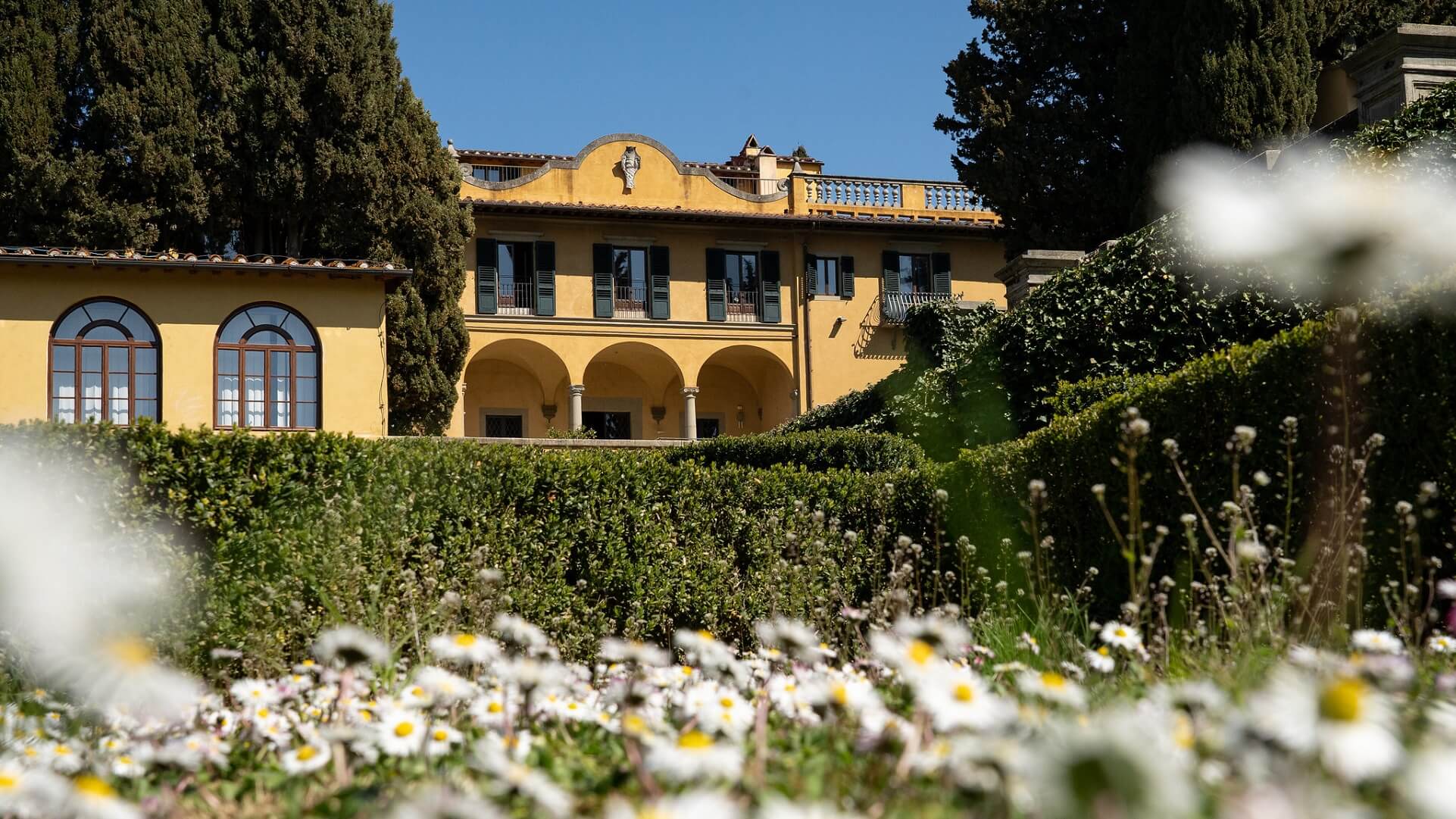
The European Governance and Politics Programme (EGPP) is an international hub of theoretical and empirical academic research on Europe’s politics and governance. Located in Villa Schifanoia, home of the Robert Schuman Centre for Advanced Studies, the programme is committed to combining solid theoretical foundations to analyse the interaction between European integration and national politics with rigorous empirical analysis based on extensive data collection.
Launched in 2018, the EGPP was established as the successor programme to the European Union Democracy Observatory (EUDO), which positioned the Robert Schuman Centre and the EUI at the forefront of research on the EU since its creation in 2006. In 2020, Daniele Caramani was appointed Ernst B. Haas Chair in European Governance and Politics, and in this capacity took over the directorship of the EGPP from Brigid Laffan, the programme’s founding director from 2018 until 2020. Since 2024, EGPP is steered jointly by a board of co-directors: Veronica Anghel, Daniele Caramani, Simon Hix, Erik Jones, Waltraud Schelkle and Lorenzo Cicchi, who has worked as EGPP Coordinator since its foundation.
The EGPP facilitates the EUI’s research on European politics and governance and develops co-operation with other world-leading research programmes on Europe. EGPP builds a forum for researchers to share theoretical and analytical perspectives and broaden research networks. It encourages EUI researchers to participate with their own projects on Europe, including PhD proposals and various fellowships offered by the EUI.
Research on Europe

The EGPP brings together academic research on European national politics and European integration. It covers both politics and governance perspectives and combines a strong focus on theory with extensive empirical research. The programme links research on mass behaviour, elites, and actors, in particular parties, movements, and the media in the electoral and policy-making processes. A central focus of the EGPP’s research agenda is on affective polarization — the emotional divisions that increasingly shape how citizens perceive political opponents — and democratic backsliding, examining the conditions under which democratic norms and institutions come under strain across Europe.
European politics and governance are analysed through the lens of broad fault lines that divide Europe territorially and functionally: between groups of states, between centralizing policies and national resistances, between socio-economic classes and other dimensions cutting across national borders, and between countries with different levels of integration. The research agenda also includes the multi-level divide between the supra-national EU technocratic push for integration and the demarcating populist resistance from nation-states – both challenging representative government and raising questions about the future of democracy in Europe. The transformation of European politics is addressed in a long-term perspective, reaching back to the founding moments of nation-states and European integration.
Find out about the theoretical perspectives in our Theoretical Framework page.
Grants and Projects
The core of the EGPP’s research activities is supported by research projects financed by a variety of funding agencies at national and EU level. It also hosts external and collaborative projects.
Learn more about EGPP’s Projects here.
Publications and Datasets
The research within the EGPP fosters the publication of books, working papers, reports, policy briefs, and journal articles. Additionally, the EGPP constitutes a platform for a number of key datasets to support research on European politics.
See the EGPP’s Publications and Datasets page.
Events
Regular events include the EGPP Annual Conference and the EGPP Seminar Series, which happens on Wednesdays at 12:30-2.00pm and hosts research seminars, book launches, and meetings of the European Union Studies Working Group. Aside from these regular events, the EGPP holds workshops, debates, and conferences organised within the various projects and covering the topics specific to their research. Regular dialogues are held jointly with the European Parliament Research Services (EPRS) to bring together academics and policy makers.
Visit our Seminars and Conferences page for more information.
Members of EGPP
Aside from the co-directors and team, research at EGPP is comprised of associates and fellows who engage in research, lead the projects as recipients of grants, organise workshops and conferences, and participate in events. Associates lead core projects, both as project leaders and by engaging in fundamental empirical and theoretical research on European politics and governance at the EGPP. Fellows are regular visitors and participants to EGPP activities, collaborators in core projects, or leaders of external projects. The EUI’s PhD researchers are closely involved in EGPP activities.
More information about the members of EGPP can be found at our People page.
Public Engagement
The programme fosters engagement with the political and policy world outside academia through various dissemination initiatives: co-organised events, public lectures, policy briefs, and op-eds in blogs and the press, and by reaching out to civil society and the public sphere through digital media and social networks.
Engagement with European and national elections
The EGPP is actively engaged in the study of electoral behaviour and political representation. The programme develops Voting Advice Applications (VAAs), online tools designed to help citizens identify their political preferences and compare them with the positions of parties and candidates. These applications serve a dual purpose: they inform and engage citizens ahead of elections, while also generating valuable data for academic research on voting behaviour, party competition, and political representation. The EGPP has deployed VAAs for European Parliament elections as well as relevant national elections across Europe.
Collaboration with local universities
The EGPP has established strong partnerships with leading Italian academic institutions. Together with the Scuola Normale Superiore (SNS), it organises a seasonal school on democratic backsliding and political conflict, bringing together early-career researchers and established scholars to explore the causes, dynamics, and consequences of democratic erosion across Europe.
International Connections
The EGPP acts as a global hub in which research initiatives converge through project collaboration, events organization, and collaborative publications.